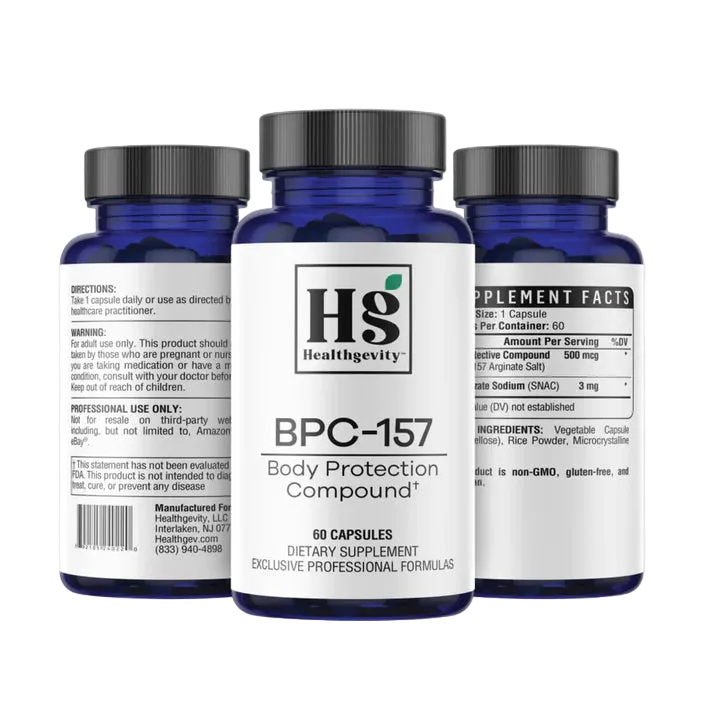
They're often sold as research chemicals "not for human consumption," despite widespread human use
Ready to Explore BPC-157
Disclosure of interest: Junji Fukumori: nothing to disclose, Kenji Fukutome: nothing to disclose, Shuta Aketa: nothing to disclose, Yasushi Motoyama: nothing to disclose Poster Session I - DIGITAL TRANSFORMATION, AI AND ROBOTICS 07.00 - DIGITAL TRANSFORMATION, AI AND ROBOTICS - 07.01 - TECHNOLOGY INNOVATIONS: ROBOTS, VIRTUAL REALITY, ARTIFICIAL INTELLIGENCE AND MORE P299 - ESOC25-2147 PREDICTING COGNITIVE IMPAIRMENT USING MACHINE LEARNING IN PATIENTS WITH CEREBRAL SMALL VESSEL DISEASES Tingting Mao 1 , Tingting Wang 2 , Yilong Wang 2 , Ling Guan 1,2 1 Beijing Institute of Technology, Beijing, China, 2 Beijing Tiantan Hospital, Beijing, China Background and Aims: Cerebral small vessel disease (CSVD) is a major cause of vascular cognitive impairment (VCI), yet predicting the progression of cognitive decline including different cognitive domains in patients with CSVD still remains challenge
Effects of cerebellar stimulation on epilepsy, the EEG and cerebral palsy in man
Testicular problems resulting in abnormal sperm parametersthe vast majority of which are idiopathic (of unknown cause)are involved in approximately 6580% of cases of male infertility
This dual mechanism approach allows researchers to examine whether combined pathway activation produces different metabolic effects compared to single-pathway targeting